The Museo in Cuenca St
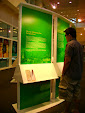
La Carcel de Cebu has been Cebu’s top prison since it was opened in 1871. It’s the province version of Bilibid de Manila. It has been converted to become the provincial museum by Governadora Garcia. Renamed Museo Sugbo, it has been wonderfully transformed from a detention center to first class museum.
The Carcel was designed by Escondrilla, Cebu’s great 19th century architect, It’s an outstanding construction for it use so little space but housed prisoners for centuries. It has been used mainly as penitentiary by the Espanoles, Japanese and Americanos – and it continued to do so under Filipinos. Originally intended to serve Visayas requirement for a penal complex (Carcel del Distrito) it was only in 2007 that it was officially opened to the public as the provincia’s repository of heritage.
Exhibit of various mementos from the brutal Japanese occupation. Samurais, uniforms, bombs, flags and Japanese propaganda material to the recent excavations that unearthed jars and coffins of the prehispanic Filipinos are on display.
Guided tours is also available without extra charge, entrance is P20 for Filipinos and P40 for foreigners which is far cheaper than what museums in Manila charges. All the rooms are air-conditioned, security and staff are approachable.
Other interesting sections are the ones dedicated to the pioneers of Cebuano politicos. Vicente Rama, the first Mayor of the ciudad, who earned his reputation with his Nueva Fuerza articles, a Spanish daily – another famed journalist was Vicente Sotto, known for his brilliant writings in Spanish and pure Cebuano. Sotto would become a popular senador, he was regarded as Liberal party’s maverick senator (preceding McCain!).

Narrow pathways of what was once a prison quarter
There were surprises, the first one was Leon Kilat’s anting-anting! Superbly preserved, one could clearly read the prayers written on the piece of cloth, legend has it that this handkerchief made the man invincible against bullets. So feared was his amulet that when he was assassinated in Carcar by no less than his second man, he was stabbed instead, because people really believed that bullets had no effects on him. A great equestrian, Kilat once work in Cebu as a jockey and was known to be fluent in Spanish.
The other surprise was not really surprise because I’ve known beforehand that the documents can be found in the museum but when the time you see them, you’re astonished that it’s in front of you! The letters of the Adelantado, Miguel Lopez de Legazpi to no less than King Philip can be found in air tight glass enclosure – the letters were not only the first postage that came out of the islas but it contains the report of the country’s premier Governador General on his condition and that of the mission. The other letters on display are his affirmation as the Governador General of the new colony.
The popular translation of these series of letters were from Emma Blair and James Alexander Robertson.
---
To the Sacred Royal Catholic Majesty:
I gave an account to your majesty of my departure from Puerto de la Navidad, which is located in Nueva España, with your royal fleet for the discovery of the Western Islands. Continuing my voyage until February thirteen of this present year, I arrived at one of the Filipinas Island. Afterward I cruised among other islands of this archipelago, until I reached this island of Cebu, whence I dispatched a vessel to Nueva España to discover the return route, and to give an account to your majesty of the incidents of our voyage until the departure of this vessel. The relation of the voyage is dispatched together with this letter, as well as certain other information in regard to the change of feeling among the natives respecting the friendship and goodwill that they have been wont to exercise toward the vassals of your majesty, and the cause therefore; the possessions that have been taken in your majesty's name; and the routes of the pilots of this fleet. I beseech your majesty that you will have these examined, and provide whatever seems most fitting. I shall remain in my settlement in this island of Cebu until I receive the orders your majesty shall see fit to impose upon me, although I have but few people.
I am writing also to the royal Audencia of Nueva España to beg succor of both people and ammunition, in order that I may sustain myself until your majesty has seen all these records, the memorandum of the articles asked by the officials of your royal hacienda [treasury] residing here, and the general and individual communications of those who remain here, and until your majesty shall have provided and ordered what is most fitting, and have signified your royal pleasure. Since this undertaking is so vast, and of so great import in regard to the spiritual and temporal, and has ended so happily, and is so seasonable, I humbly beg your majesty to order that particular account be taken of it, and that you order the succor and provision petitioned and requested from these islands; and that you will give the matter into the charge of one who will provide and effect it with all care and diligence; for I trust, with the help of God, our Lord, that very great blessings in the service of God, our Lord, and of your majesty, will result, with the increase of your royal income and the universal good of your kingdoms and seigniories.
I beseech your majesty that, yielding with your accustomed magnificence in showing favor to your servants who serve you in matters of great import, you will be pleased to order that the communications accompanying this letter be examined, and that you will grant me the favor that seems most fitting to your majesty, whose sacred royal Catholic majesty may our Lord have in his keeping, and give you increase of kingdoms and siegniories for many and felicitous years.
From Cebu, May 27, 1565.
Your sacred royal majesty's faithful servant, who kisses your majesty's royal feet,
Miguel Lopez de Legazpi
---

The only vegetation I found inside the prison hall

The quarters were all repaired like this one